Advent
 The liturgical season of Advent takes its name from the Latin word adventus, derived from the verb advenio, which means “I come toward” or “I arrive.” Advent in a general sense refers to any coming or arrival, though in the liturgical sense, of course, it refers to the coming of Jesus Christ to earth. Advent is the season that prepares us for the coming of Christ at Christmas.
Ancient Greek has a different word for arrival with a different emphasis in liturgical and theological connotation. The Greek word παρουσία (parousia) means “presence,” “coming,” or “arrival.” Most literally, this word refers to being near, whereas the Latin word advent implies motion toward. Beyond this subtle etymological distinction, however, the Greek word parousia typically is associated in the New Testament and beyond with the Second Coming of Christ.
So while these two words both mean arrival, they’ve primarily come to represent two different arrivals of Jesus Christ. Why is this important now? It’s impossible for Christians to celebrate one arrival without looking to the other. In the season of Advent, we remember the coming of Jesus at his birth in Bethlehem, but we also necessarily look forward to the Second Coming of Christ or parousia at the end of time. Conversely, any looking forward to Christ’s Second Coming necessarily calls us to reflect also on his first arrival. The two events are inseparably linked, so much so that even the language we use to describe them reflects their relationship.
related topics: greatly troubled; Happy Christmas; magnify; Ordinary Time; parousia; parthenos
you also may like our study of Saul, David & Solomon (digital only)
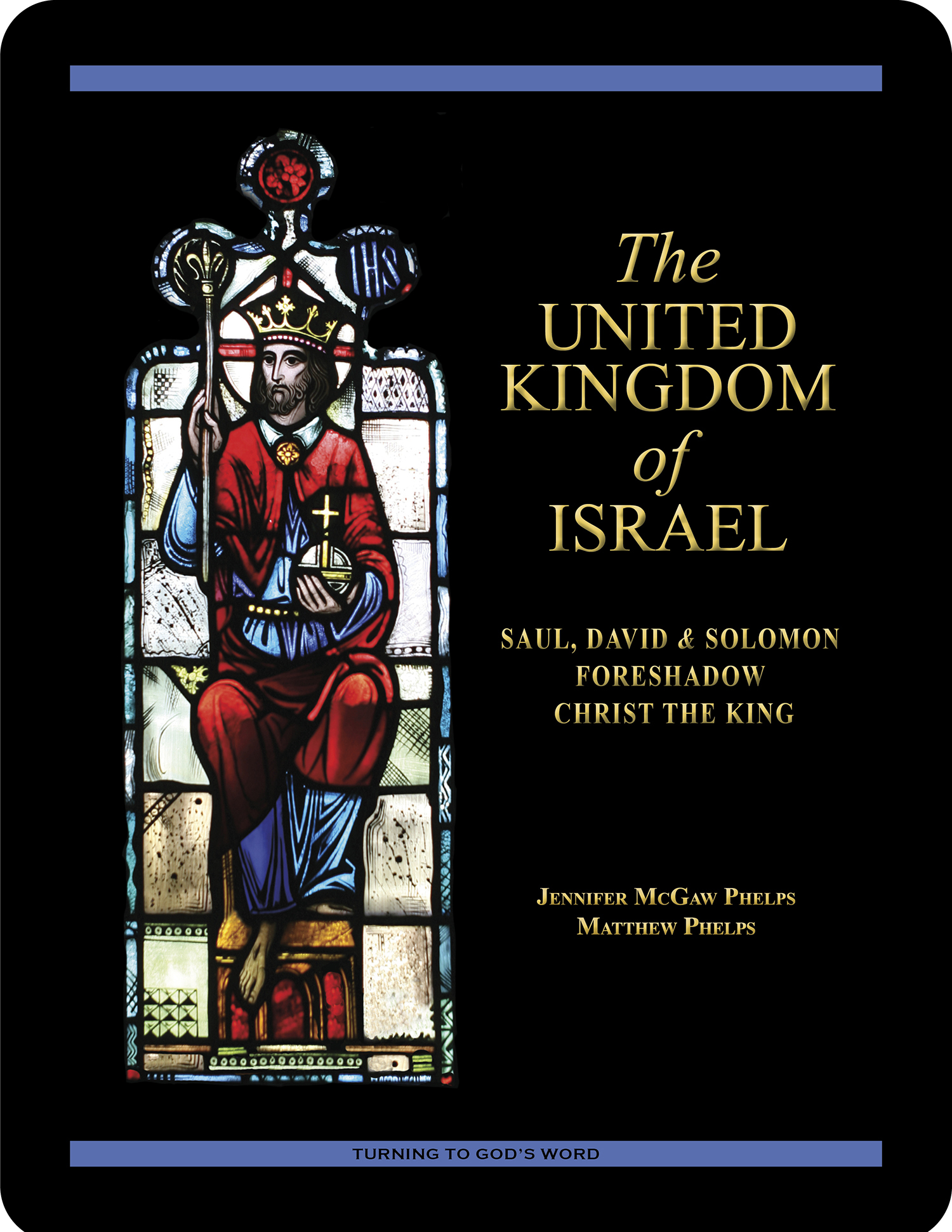 The United Kingdom of Israel: Saul, David & Solomon Foreshadow Christ the King, a 28-lesson Catholic Bible study with an imprimatur, provides an in-depth look at the First and Second Books of Samuel to learn how the lives of the monarchs Saul, David, and Solomon point ahead to the kingdom of heaven. The unified reign of King David is seen as a foreshadowing or type of the unity that is one of the four marks of the Church—the kingdom of God—established by Jesus Christ. Click here to view a sample of the first lesson.
 Click on the picture of the statue of Moses with horns (above) to learn more about Lost in Translation. A new entry is archived each Monday. Contact us to receive Lost in Translation by email every week. You may use any of the contact links on our website to ask Matthew a question.