baptism
 As we celebrate the baptism of Jesus by John we reflect on the word baptism, which comes from the Greek word βαπτίζω (baptizo) and means “dip” or “plunge.” Baptism as it’s usually mentioned in the Bible is a dipping or submerging of the person being baptized into water. John’s baptism involved dunking people in the Jordan River as a sign of washing. The Gospel According to John 1:24–34 (NABRE) describes John baptizing people for repentance and the forgiveness of their sins.
The baptism of Jesus can seem like an odd event in this context. We know that Jesus was without sin and would not have needed repentance. Why then would Jesus choose to begin his public ministry by being baptized? The three synoptic accounts handle this question differently. In the Gospel According to Mark 1:7–11 (NABRE), the event is treated in a straightforward manner—John baptizes Jesus. In the Gospel According to Matthew 3:13–17 (NABRE), we see John baptizing Jesus only reluctantly, with Jesus having to insist on the necessity over John’s objection. Finally, in the Gospel According to Luke 3:15–22 (NABRE) we see the use of the passive voice—”Jesus also had been baptized” with no direct account of John doing it, and the Holy Spirit descends some time after—placing the significance of the event not on the baptism itself but on God’s words from heaven.
From the difference in these accounts, we see that even the authors of the synoptic Gospels had a somewhat different understanding of the significance of and need for Jesus to be baptized. Consider why you think Jesus might have wanted to be baptized, and why he might have chosen John to perform this baptism.
How does your own baptism contribute to your ministry of Christianity?
related topics: born from above; circumcision
you also may like our free year-long study of Scripture & the Rosary (digital only)
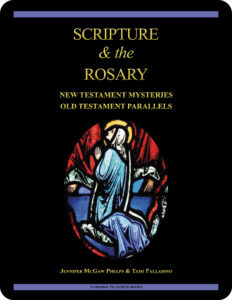 Scripture & the Rosary: New Testament Mysteries, Old Testament Parallels, a 26-lesson Catholic Bible study with an imprimatur, looks at the biblical foundations of the Rosary. The study includes lessons on Pope St. John Paul II’s Rosarium Virginis Mariae (Rosary of the Virgin Mary), the Apostles’ Creed, and the Luminous Mysteries as well as the original 15 Mysteries of the Rosary. Color photographs of stained glass windows depict key scenes in the lives of Jesus and Mary. In lieu of a sample, check out our free digital lessons.
 Click on the picture of the statue of Moses with horns (above) to learn more about Lost in Translation. A new entry is archived each Monday. Contact us to receive Lost in Translation by email every week. You may use any of the contact links on our website to ask Matthew a question.