born from above
 In the third chapter of the Gospel According to John (NABRE), we encounter Jesus’ famous interaction with the Pharisee, Nicodemus. In this encounter between the two, Jesus emphasizes the need for being born from above, sometimes translated as “born again” or “born anew.” There’s little consistency among popular English translations of this phrase, however, which appears in the Gospel According to John 3:3 (NABRE) and again in the Gospel According to John 3:7 (NABRE).
The Greek word ἄνωθεν (anothen) comes from two parts, the preposition ἀνά (ana) meaning among other things “upward.” In addition, the suffix -ωθεν (-othen) is equivalent in meaning to the deprecated English suffice -ence. Both indicate direction from whatever word is being modified. As a result, ἄνωθεν clearly means “from above.”
Knowing the meaning of the Greek words, however, is not the same as knowing the meaning of the passage. We don’t usually talk about birth in terms of direction from somewhere, and Jesus’ phrase by all accounts seems odd. Jesus clearly associates direction with Baptism. What do you think that Jesus may have had in mind when he talked about being born from above? Why do you think that so many translators dodge the issue of direction when translating this passage?
related topics: baptism; circumcision
you also may like our study of the book of Genesis
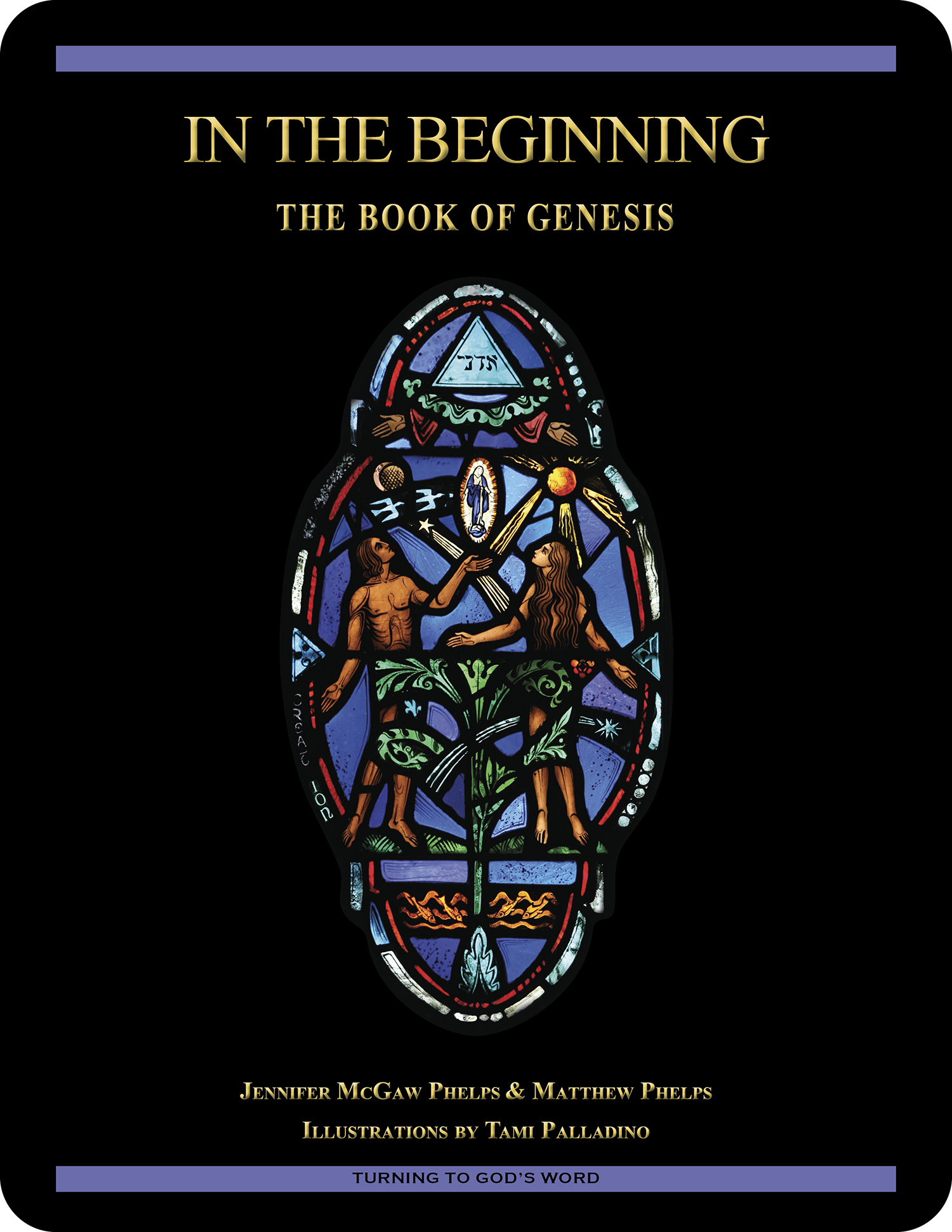 The first seven lessons of In the Beginning: The Book of Genesis, a 28-lesson Catholic Bible study with an imprimatur, provide an in-depth look at the very earliest biblical history—including the two accounts of Creation, events surrounding the Fall of Adam and Eve, the relationship between Cain and Abel, and the baptismal foreshadowing present in the account of Noah and the Flood. Remaining lessons look at lives of the patriarchs Abraham, Isaac, Jacob, and Joseph. Click here to view a sample of the first lesson.
 Click on the picture of the statue of Moses with horns (above) to learn more about Lost in Translation. A new entry is archived each Monday. Contact us to receive Lost in Translation by email every week. You may use any of the contact links on our website to ask Matthew a question.