
conscience
 The First Letter of Peter 3:16 (NABRE) looks at the attitude Christians are to take in bearing witness. Peter describes this attitude by emphasizing the importance of “keeping your conscience clear.” The idea of conscience as we know it today, however, is somewhat foreign to Greek thought.
The Greek phrase used by Peter is συνείδησιν ἔχοντες ἀγαθήν (suneidesin echontes agathen). ἔχοντες (Echontes) is the participal form of a Greek verb that in this context means “hold” or “keep.” ἀγαθήν (Agathen) is the Greek adjective meaning “good,” in this case good in the moral sense. The word συνείδησιν (suneidesin) comes from the Greek word συνείδησις (suneidesis), which literally comes from a prefix meaning “with” paired with the Greek word for “knowledge.”
Conscience in Greek, then, literally means shared knowledge. As a result, the concept of conscience in Greek is an objective and externally defined view of right and wrong—rather than a subjective and internal view as we tend to see it today.
What is Peter suggesting that we do? He’s urging those witnessing to Christ to keep themselves in line with the accepted Christian view of right and wrong. How do you think that this exhortation of Peter’s applies to the way in which we witness as Christianity today? What can you do to ensure that your conscience is clear and in line with the moral teachings of Jesus?
related topic: witness & testimony
you also may like our study of the book of Revelation
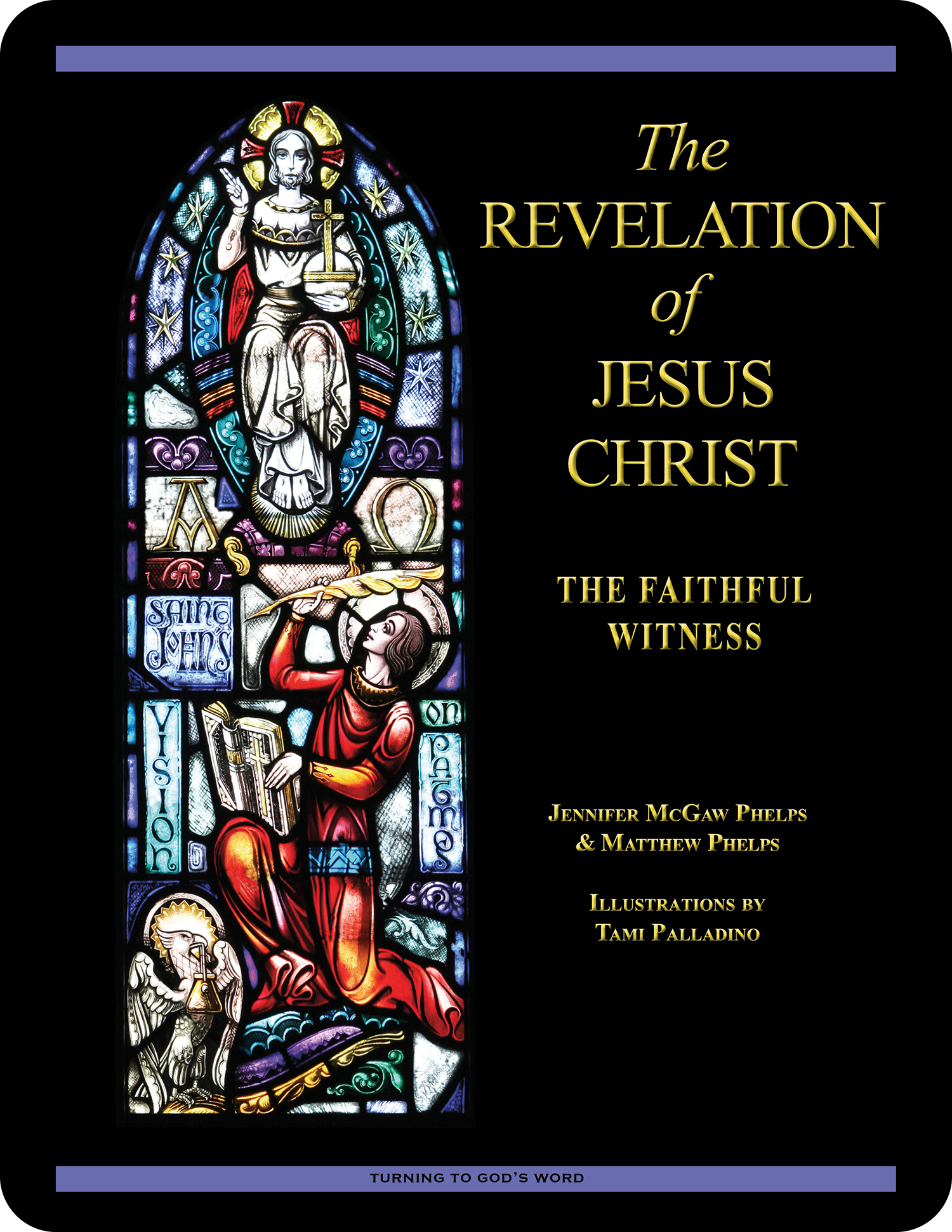 The Revelation of Jesus Christ: The Faithful Witness, a 23-lesson Catholic Bible study with an imprimatur, examines ways in which our traditional Christian view of heaven is built on Hebrew apocalyptic visions recorded in the Old Testament. This recently revised study includes maps and additional commentary and takes a close look at the role of the prophets in present-day Christianity. Illustrations by Tami Palladino depict the often-misunderstood images in the book of Revelation. Click here to view a sample of the first lesson.
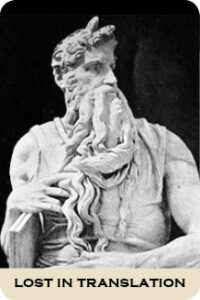
 Click on the picture of the statue of Moses with horns (above) to learn more about Lost in Translation. A new entry is archived each Monday. Contact us to receive Lost in Translation by email every week. You may use any of the contact links on our website to ask Matthew a question.