
First Letter of John
 The First Letter of John describes perfect love—both its conditions and its benefits. This letter portrays perfect love as the Christian ideal and the goal toward which all Christians must strive. The concept, however, has become diluted due to the deterioration in meaning of the word perfect. What does it mean to have perfect love?
The Greek word τέλειος (teleios) and the Latin perfectus ultimately have similar meanings, though etymologically they are somewhat different. The Greek word is an adjective that comes from a noun that means “outcome,” “result,” or “end,” and so means “perfect,” “accomplished,” “complete.” The Latin perfectus comes from the prefix per– meaning “through” and the verb facio meaning “do” or “make,” and so means “carried out” or “accomplished.” Both of these words, then, come to mean something like “done through to the end.”
So what is perfect love? It is love that has reached its end or goal—it is complete. In John’s view of love, then, love is not merely a passive feeling. Instead, love is an active striving toward a set goal. What do you think that goal is? Do you think that your love of God is moving you toward that goal?
related topics: agape; First Letter to the Corinthians; mercy; perfect; philia; you are my friends
you also may like our study of the Letter to the Hebrews (digital only)
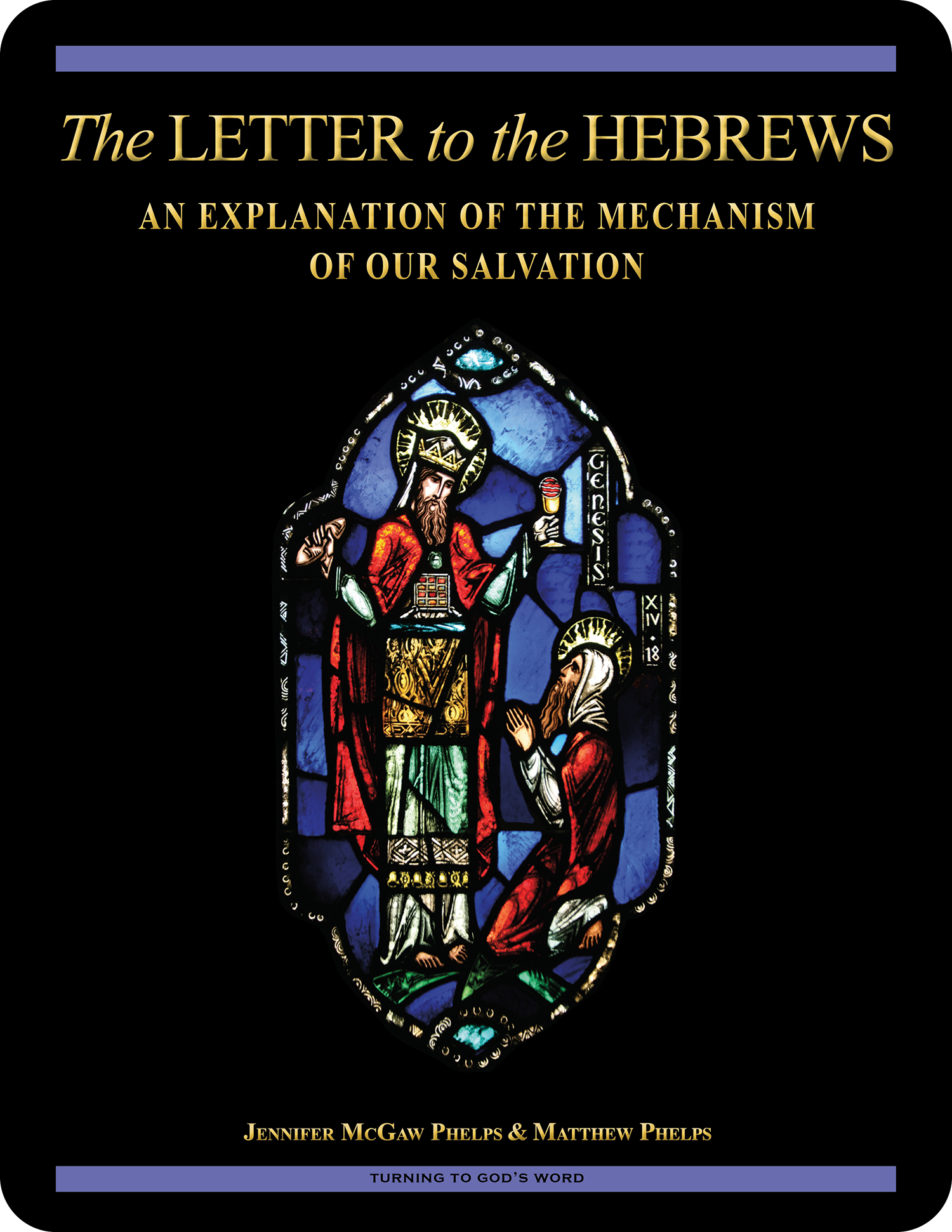 Many Christians struggle to understand one of the central mysteries of our faith: how Jesus can be both human and divine at the same time. The Letter to the Hebrews: An Explanation of the Mechanism of Our Salvation, an 18-lesson Catholic Bible study with an imprimatur, offers an in-depth look at the way in which Jesus’ dual nature allows for the salvation of humanity. The Letter to the Hebrews is designed to provide information that will encourage Christians to remain faithful. Click here to view a sample of the first lesson.
 Click on the picture of the statue of Moses with horns (above) to learn more about Lost in Translation. A new entry is archived each Monday. Contact us to receive Lost in Translation by email every week. You may use any of the contact links on our website to ask Matthew a question.