
freedom
 In the Letter to the Galatians 5:1 (NABRE), Paul emphasizes the freedom granted in Christianity: “For freedom Christ set us free.” This statement is typical of Paul’s writing and can be a bit tricky to unravel. Clearly, the key word in this case is the word freedom.
The Greek word for freedom is ἐλευθερία (eleutheria), which is roughly equivalent in meaning to the English concepts of freedom or license, though it is worth keeping in mind that the Scriptures predate American democracy by a considerable length of time, and so there is some difference conceptually between Paul’s vision of the freedom offered by Jesus Christ and our modern idea of the land of the free.
What is freedom at its root? We typically apply this concept two ways. We can be free from something or free to do something–license. When we are free from something, it does not have influence or control over us. We talk about being free from an addiction, oppression, terrorism, etc. In such cases, the things we are free from do not have control or influence over us.
In the sense that we are free to do something, we instead are granted an easing of other restrictions. Freedom of speech guarantees that speech will not be limited. Freedom of religion guarantees that we can practice whatever faith we want. In both cases, freedom ultimately refers to having an unencumbered will. We can do what we please.
Now on to Paul’s cryptic statement that “Christ set us free.” When you think about this statement, what do you think it is that Jesus Christ freed us from? What encumbrances or limitations to our will did Christ remove? What choice or choices can we now make that we could not make before? Additionally, Paul writes that Jesus Christ did this for the sake of freedom. Because Christ freed us, we have become free. This statement suggests that Christ’s act was complete and absolute. We are free to do as we will. How do you think Christ intended us to use this freedom? How do you use the freedom granted to you?
related topics: belief; believe in Jesus; healing; justification
you also may like our study of the Gospel According to John
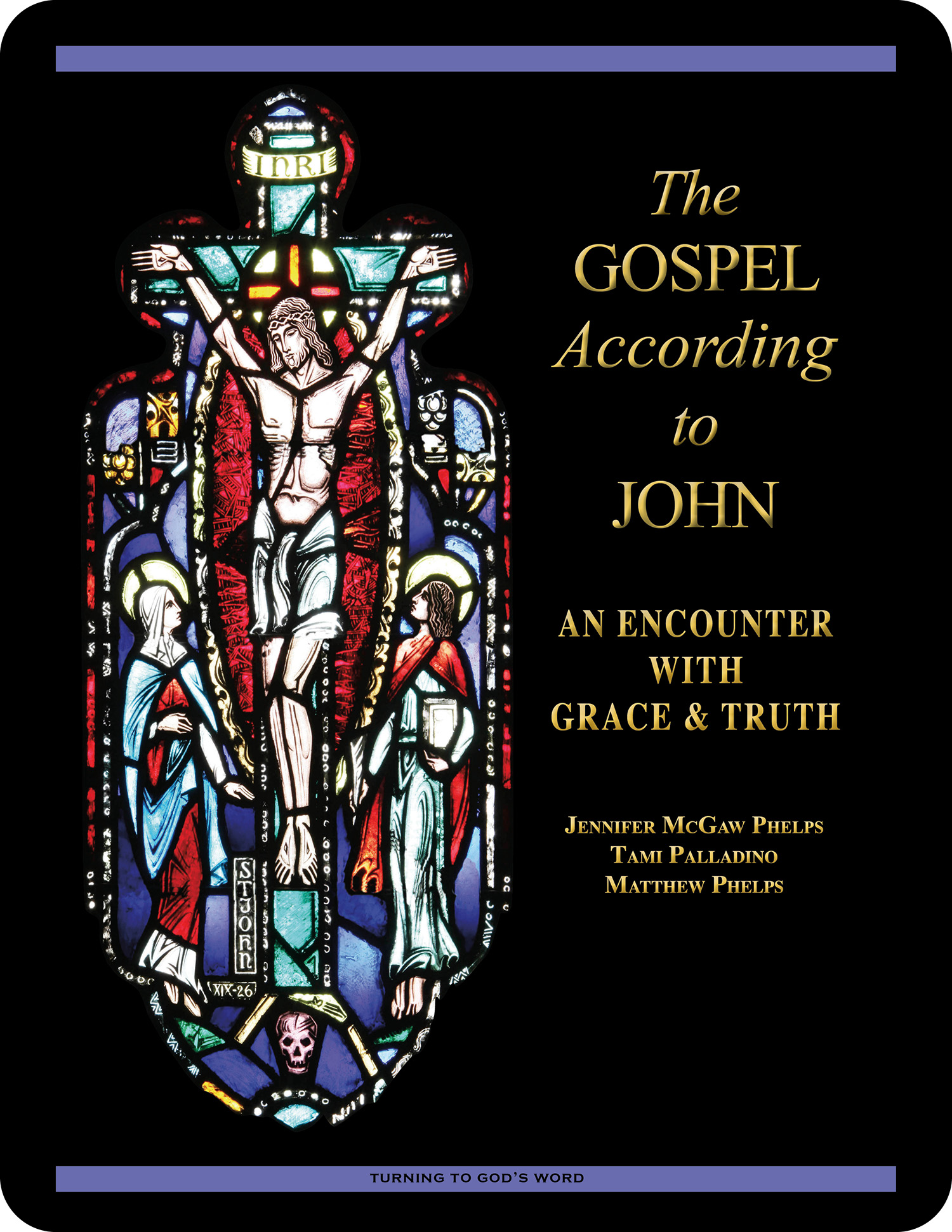 The Gospel According to John: An Encounter with Grace & Truth, a 25-lesson Catholic Bible study with an imprimatur, examines the Fourth Gospel’s view of Jesus Christ as the Son of God, with special emphasis on the institution of the sacraments of the Church as the means by which Christians are purified and made holy. This recently revised study includes maps and additional commentary, and takes a closer look at the way in which Jesus relates to individual men and women. Click here to view a sample of the first lesson.
 Click on the picture of the statue of Moses with horns (above) to learn more about Lost in Translation. A new entry is archived each Monday. Contact us to receive Lost in Translation by email every week. You may use any of the contact links on our website to ask Matthew a question.