
 The Letter to the Hebrews:
An Explanation of the Mechanism
of Our Salvation
Lesson 6 A Steadfast Anchor of the Soul
the Letter to the Hebrews 6:1–20
Revised Standard Version Catholic Edition (RSVCE)*
New American Bible Revised Edition (NABRE)*
Catechism of the Catholic Church
ex libris (in our library)
Tami Palladino’s visual-meditation journal
cross references in the Letter to the Hebrews
next lesson: Power of an Indestructible Life
This material coordinates with Lesson 6, “A Steadfast Anchor of the Soul,” on pages 23–25 in The Letter to the Hebrews: An Explanation of the Mechanism of Our Salvation.
“In the days of his flesh, Jesus offered up prayers and supplications with loud cries and tears, to him who was able to save him from death, and he was heard for his godly fear. Although he was a Son, he learned obedience through what he suffered; and being made perfect he became the source of eternal salvation to all who obey him, being designated by God a high priest according to the order of Melchizedek.”—the Letter to the Hebrews 5:7–10
welcome to our in-depth study of the Letter to the Hebrews
We invite interested groups and individuals to check out the sample first lesson from this 18-lesson 
 Turning to God’s Word Catholic Bible study. These online study pages link to free lesson videos and cross references in the biblical text. The Letter to the Hebrews: An Explanation of the Mechanism of Our Salvation has been granted an imprimatur. The study currently is being expanded; please contact us if you’re interested in purchasing a digital copy of the existing version from our website shop. If you have a Bible-related question or comment, click on one of the “ask us your question” or “what do you think” buttons on any online study page.
open with prayer
It’s always wise to begin any Bible study with prayer, whether reading the Scriptures alone or meeting with others in a discussion study group. You can pray using your own words or use one of the opening prayers on our website. We especially like the following:
Lord Jesus, you promised to send your Holy Spirit
to teach us all things.
As we read and study your word today,
allow it to touch our hearts and change our lives. Amen.
morality & theology & Jesus as the forerunner
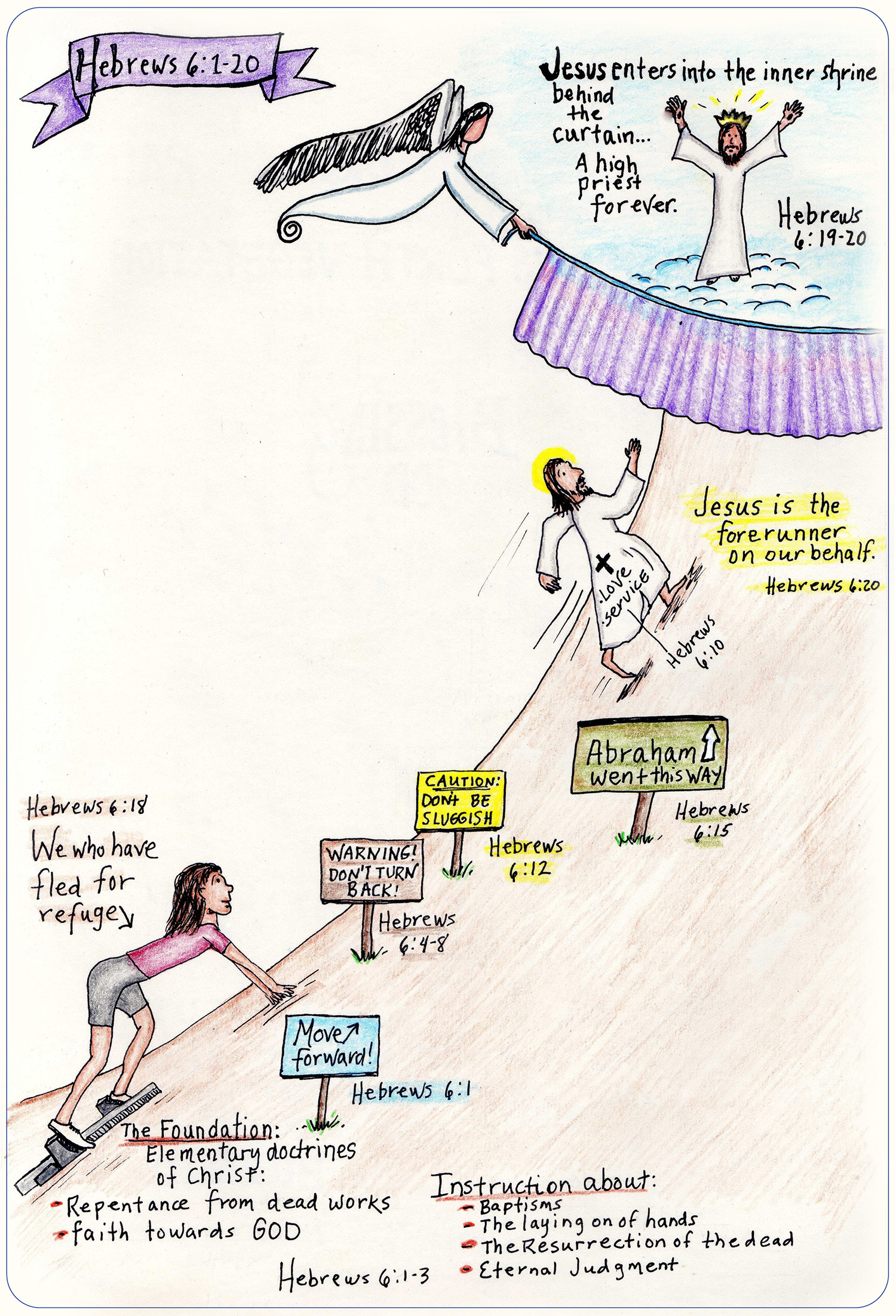 The author of the Letter to the Hebrews appears to have a primary moral purpose behind his writing, and this focus on morality becomes apparent in the sixth chapter. Previous chapters mainly have dealt with establishing a foundation to explain the theology behind how it is that Jesus is able to bring about the possibility of salvation for all men and women. Before he addresses that, the author switches gears to tell his audience why he’s concerned with the mechanism of salvation in the first place. The reason? He wants to motivate early Christians to maintain their faith in the face of difficulties. Present-day Christians can benefit from the same motivation. Don’t miss Turning to God’s Word co-founder Tami Palladino’s illustrated reflections on the Scripture passages that form the basis of The Letter to the Hebrews: An Explanation of the Mechanism of Our Salvation. Click on the illustration to enlarge it, and also check out Tami’s visual-meditation journal to see all of her drawings. Her reflections for this lesson, “A Steadfast Anchor of the Soul,” are on pages 22 through 25 of her journal.
 every lesson has a free video (06:53)
Don’t forget—each lesson of The Letter to the Hebrews: An Explanation of the Mechanism of Our Salvation  has a related video. In these short presentations, Turning to God’s Word author Matthew Phelps reads the biblical text for the lesson and comments about it. You can watch the videos as part of your preparation or to catch up if you have to miss a discussion. Because the videos are on YouTube, you can access them wherever and whenever it’s convenient—and they’re free. This study and its
  videos are undergoing revision to incorporate additional material. The original 18 lessons pertaining to the Letter to the Hebrews currently are available digitally.
The Scripture ranges for the videos that accompany this Catholic Bible study from Turning to God’s Word match the ranges for the sets of questions in The Letter to the Hebrews: An Explanation of the Mechanism of Our Salvation. You can follow the video overview as Turning to God’s Word author Matthew Phelps discusses Lesson 6, “A Steadfast Anchor of the Soul,” on pages 28–31.
moving beyond basic Christian catechesis
The author of the Letter to the Hebrews emphasizes that he’s not interested in revisiting basic Christian catechesis, with which he expects his audience of early Christians already to be familiar. In the previous chapter he likened his audience to infants in terms of their spiritual development. He now makes an effort to encourage them by writing that he’s aware of their good works and their love, and he says that his goal is to help them avoid falling away from their faith.
the popes inspire us—one way that Jesus is like a shepherd
 In the sixth chapter in the Letter to the Hebrews, the author uses the image of an anchor to describe Christian hope. Pope Benedict XVI sees hope in light of Jesus’ return to the Father: “Jesus came into the world to bring man back to God, not on the ideal level—like a philosopher or a master of wisdom—but really like a shepherd who wants to lead his sheep back to the fold.” You can read the former pope’s views in “Nature of Hope” reprinted on page 25 of The Letter to the Hebrews: An Explanation of the Mechanism of Our Salvation.
ex libris—how would you define hope?
 The author of the Letter to the Hebrews offers one popular definition, but if you’d like to know more about this theological virtue (the other two are faith and love),
  check out our ex libris—main bookshelf entry for the book Faith Hope Love by the philosophical writer Josef Pieper. His small volume consists of three sections in which he relies on etymology to examine linguistic clues that shed light on the underlying meaning of each of the three theological virtues. The result is surprisingly helpful information that has many practical applications for Christians.
what do you think about God’s sworn oath to Abraham?
To help his audience understand the seriousness of their commitment to the Christian way of life, the author of the Letter to the Hebrews reminds them of the nature of God’s oath to their ancestor Abraham.
? Why do you think it is that the author brings up Abraham, a Hebrew descendant of Eber?
? Consider how people in Jesus’ day regarded Abraham.
? Consider how Jesus regarded Abraham? Support your position with examples from the Gospels.
? What effect might an oath between God and a long-dead Hebrew be expected to have on the early Christians to whom the Letter to the Hebrews is written?
? In the Letter to the Hebrews 6:15, the author credits Abraham’s patient endurance as the reason that Abraham obtains God’s promise. Learn more about Abraham in Lesson
8 The Call of Abram through Lesson 13 God Tests Abraham in the Turning to God’s Word  Catholic Bible study In the Beginning: The Book of Genesis. The idea of patient endurance also shows up in the first three chapters of the book of Revelation.
? Consider why patience and endurance are so important to God, You can learn more in Lesson 2 Behold, I Am Alive for Evermore in the  Turning to God’s Word Catholic Bible study The Revelation of Jesus Christ: The Faithful Witness.
? What effect do you think Old Testament salvation history has on present-day Christians?
? Consider how the oath between God and Abraham might play a part in your own salvation.
? In what ways does patient endurance figure into your spiritual life?
apostle; apostasy & heresy—you could look these up in our archives
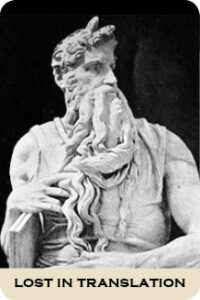 A reader has asked if the words apostle and apostasy are related. The word apostle comes from the Greek apo + stello, which means “send out.” The word apostasy, is from the Greek apo + istemi, which means “stand under.” To learn more, read Lost in Translation, an online column in which Turning to God’s Word author Matthew Phelps helps readers connect with ideas expressed in the original languages of the Scriptures. New Lost in Translation entries are posted on Mondays, and past entries are archived on our website. Contact us if you’d like to receive Lost in Translation by email every week.
a connection between apostasy & Jesus’ crucifixion
In the Letter to the Hebrews 6:6, the author connects apostasy with crucifixion of the Son of God and with holding Jesus in contempt, so it seems wise for us to understand what it is that we need to avoid if we wish to dodge apostasy. Learn more by reading “Apostasy” on page 24 in The Letter to the Hebrews: An Explanation of the Mechanism of Our Salvation.
read the Catechism—can you distinguish apostasy from incredulity, heresy & schism?
Church teaching about the way these terms differ can be found in paragraph 2089 in the Catechism of the Catholic Church:
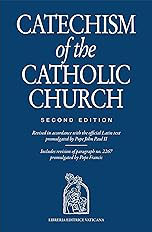 2089 Incredulity is the neglect of revealed truth or the willful refusal to assent to it. “Heresy is the obstinate post-baptismal denial of some truth which must be believed with divine and catholic faith, or it is likewise an obstinate doubt concerning the same; apostasy is the total repudiation of the Christian faith; schism is the refusal of submission to the Roman Pontiff or of communion with the members of the Church subject to him.”
the best Catholic commentary about Scripture
To find out more about how Church teaching is supported by Scripture passages in The Letter to the Hebrews: An Explanation of the Mechanism of Our Salvation, check out the Index of Citations in the Catechism of the Catholic Church. Links to the primary Scripture passages in the lesson (Revised Standard Version Catholic Edition [RSVCE*]) and relevant paragraphs in the Catechism are provided here. Not every passage in the biblical text for this study is referenced in a Catechism paragraph, however.
the Letter to the Hebrews 6:2—paragraphs 699, 1288
the Letter to the Hebrews 6:4–6—paragraph 679
the Letter to the Hebrews 6:5—paragraph 655
the Letter to the Hebrews 6:6—paragraph 598
the Letter to the Hebrews 6:13—paragraph 2810
the Letter to the Hebrews 6:19–20—paragraph 1820
the Letter to the Hebrews 6:20—paragraph 1544
to learn more, read more Scripture
If you’re having difficulty with a particular passage of Scripture, it can be helpful to read the relevant  cross references—but looking these up can take time. To make that easier, we’ve compiled the cross references from the Revised Standard Version Second Catholic Edition (RSV2CE)—the translation that we reprint in our study books. That list can be found at the top of every online study page, and it includes links to cross references in the primary biblical text for The Letter to the Hebrews: An Explanation of the Mechanism of Our Salvation.
don’t forget about our indexes & extra online material
If you’re trying to locate information about a passage in Scripture, you can look it up in the index. If you want to revisit a particular commentary, you can look that up by title in the topics index. If you want to learn more about another book of the Bible for which there’s a Turning to God’s Word study, you can read the online commentaries and watch any accompanying videos by going to the online study directories. Finally, if you have a question or would like to make a comment about any of our studies, you can use one of the “ask us your question” or “what do you think” buttons to email our authors.
ex libris—Church documents & books about religious topics
You can find links to magisterial documents referred to in Turning to God’s Word Catholic Bible studies at ex libris—magisterial documents. This page includes a listing of significant recent encyclicals as well as a number of historical Church documents. Recommended books related to Scripture study can be found at ex libris—main bookshelf.
wondering how to pronounce some of these words?
The following link is to a reading from the New International Version (NIV) Bible. To listen, click on the audio icon above the printed text. Although not taken from the translations used in our study materials, the NIV reading provides an audio guide to pronunciation of words in this lesson’s primary biblical text. A close online version of the translation of the Bible used in Catholic liturgy in the United States as well as an audio guide for daily Mass readings for the current month can be found on the website of the United States Conference of Catholic Bishops (USCCB).
the Letter to the Hebrews 6:1–20 (NIV)
 close with Bible-based prayer related to this lesson
Many of our Catholic study groups like to conclude their discussions with a prayer based on the scriptural focus of their lesson, and some participants include Scripture-specific prayer in their individual study. If you’re uncomfortable composing your own Bible-based prayers you can follow our four easy steps, or you can use the following prayer based on this lesson’s text from the Letter to the Hebrews.
God our Father,
you swore by yourself when taking an oath
to guarantee your promise to Abraham, our father in the faith,
Help us to imitate the faith and patience of Abraham
that we may inherit the promise of eternal life.
We ask this in the name of Jesus Christ,
in whom we place all of our hope. Amen.
Lesson 7 Power of an Indestructible Life, the Letter to the Hebrews 7:1–17
Lesson 5 He Learned Obedience Through What He Suffered, the Letter to the Hebrews 5:1–14
you also may like our study of the Gospel According to John
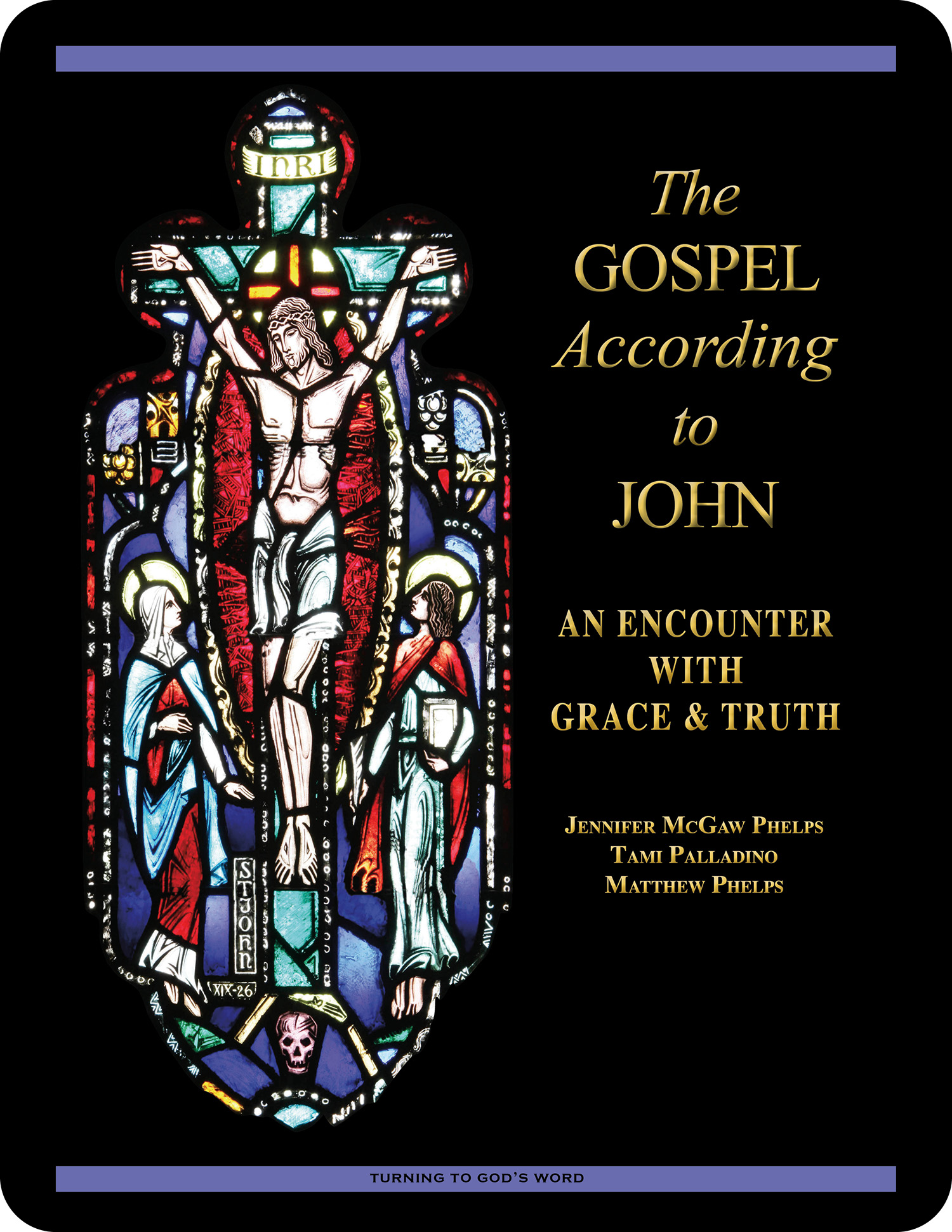 The Gospel According to John: An Encounter with Grace & Truth, a 25-lesson Catholic Bible study with an imprimatur, examines the Fourth Gospel’s view of Jesus Christ as the Son of God, with special emphasis on the institution of the sacraments of the Church as the means by which Christians are purified and made holy. This recently revised study includes maps and additional commentary, and takes a closer look at the way in which Jesus relates to individual men and women. Click here to view a sample of the first lesson.
 start a Turning to God’s Word Bible study
Thank you for your interest in The Letter to the Hebrews: An Explanation of the Mechanism of Our Salvation.  Information about beginning a Turning to God’s Word Bible study can be found at start a Bible study. Tami, Matthew, and I are available to answer your questions and to offer support. Contact us if you’re interested in purchasing a digital version of this study, in starting another Turning to God study, or in having your study schedule listed with other TtGW study groups on our website. —Jennifer
*There are seven deuterocanonical books in the Old Testament—Baruch, Judith, Sirach, Tobit, Wisdom, and First and Second Maccabees—and there are some deuterocanonical passages in the Books of Daniel and Esther. Protestants usually refer to these works as “apocryphal,” a word that means “outside the (Protestant) canon” because they’re excluded from most Protestant Bibles. Deuterocanonical means “second canon”; Catholics use that word to refer to any section of the Catholic Old Testament for which there are no extant, or existing, Hebrew manuscripts. All of the deuterocanonical books appear in the Septuagint, the earliest remaining versions of which date to the 1st century B.C. This Greek translation of the Old Testament was in common use by Jews at the time of Jesus. Learn more by reading How Do Catholic & Protestant Bibles Differ?
Turning to God’s Word printed Bible studies use the 2006 Revised Standard Version Second Catholic Edition (RSV2CE) translation for all Scripture references except those to the psalms, which are taken from The Abbey Psalms and Canticles, prepared by the Benedictine monks of Conception Abbey and published in 2020 by the United States Conference of Catholic Bishops (USCCB). All Scripture links for the online pages of The Letter to the Hebrews: An Explanation of the Mechanism of Our Salvation are to the 1966 Revised Standard Version Catholic Edition (RSVCE) translation. The New International Version (NIV) audio recordings follow the same chapter and verse numbering as the RSV Catholic translations, but the NIV translation doesn’t include the deuterocanonical books and passages.
The 1966 RSVCE uses archaic pronouns and verb forms such as “thee,” “thou,” and “didst” in the psalms and in direct quotations attributed to God. The 2006 RSV2CE replaces these with more accessible English. The few significant translation changes in the RSV2CE include rendering almah as “virgin” in the Book of Isaiah 7:14 and restoring the term “begotten” in the Gospel According to John 3:16.
Numbering varies for some passages in this Bible study. Turning to God’s Word studies (print and digital) follow the numbering in the Revised Standard Version Catholic translations (RSV2CE and RSVCE). Discrepancies in the New American Bible Revised Edition (NABRE) are noted in the Index of Scripture Citations in the study book.
 You can learn more about the psalms by viewing a sample lesson from the Turning to God’s Word Catholic Bible study Sing a New Psalm: Communicating with God Through the Prayers of the Church. The first volume covers psalms prayed at Lauds and Vespers; the second covers psalms prayed at Vigils, Day Prayer, and Compline. Numbering of psalms and verses may vary in different translations.