holy
 The Book of Jeremiah 1:4–5 (NABRE) highlights that God called the prophet even before creating him and setting him apart for his task. This idea of being set apart in order to be dedicated to God appears throughout the Old and New Testaments and is one of the most important aspects of the service of God.
The Hebrew word used in the call of Jeremiah, קָדַשׁ (qadash), literally means “set apart” but it also can be translated as “consecrate” or “make holy.” While holiness is presented as one of the great goals of the Christian life, we’ve potentially lost touch with what that means. We cannot be holy without being set apart, different, out of place.
Throughout the Old Testament, things that were holy were set aside or separated from other things. Some examples include the sabbath, a day set aside from other days; the temple, a space set apart for worship of God; and even the people themselves, a holy people set apart for God. The last example of a people set apart has been appropriated by the Church to describe those who believe in Jesus Christ. What times and spaces do Christians set apart for God?
What other things in the world today do we consider to be holy? How are these things set apart? How might setting things apart for God be beneficial? Consider whether your practice of your faith and service of God sets you apart.
related topics: consecration; holiness; perfect; righteousness; sacred; temple
you also may like our free year-long study of Scripture & the Rosary (digital only)
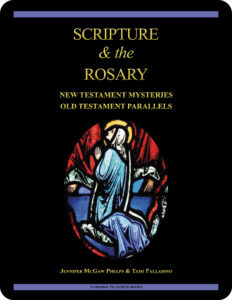 Scripture & the Rosary: New Testament Mysteries, Old Testament Parallels, a 26-lesson Catholic Bible study with an imprimatur, looks at the biblical foundations of the Rosary. The study includes lessons on Pope St. John Paul II’s Rosarium Virginis Mariae (Rosary of the Virgin Mary), the Apostles’ Creed, and the Luminous Mysteries as well as the original 15 Mysteries of the Rosary. Color photographs of stained glass windows depict key scenes in the lives of Jesus and Mary. In lieu of a sample, check out our free digital lessons.
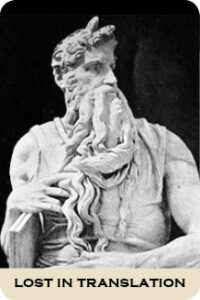
 Click on the picture of the statue of Moses with horns (above) to learn more about Lost in Translation. A new entry is archived each Monday. Contact us to receive Lost in Translation by email every week. You may use any of the contact links on our website to ask Matthew a question.