
‘I AM’
 In the Gospel According to John 6:35 (NABRE), Jesus says: “I AM the bread of life.” Jesus uses one of a number of powerful statements in the Fourth Gospel that begin with “I AM.” These statements have a somewhat odd or unnecessary construction. The Greek ἐγώ εἰμι (ego eimi) is a phrase that does translate literally to “I AM,” but in Greek the pronoun “I” or ἐγώ (ego) does not need to be stated. It’s assumed in the verb and commonly omitted.
Many scholars see in this construction and in the context a deliberate reference to the name that God reveals to Moses in the book of Exodus 3:14 (NABRE): “God replied to Moses: I AM WHO I AM. Then he added: This is what you will tell the Israelites: I AM has sent me to you.” This passage is one of the more significant in all of Scripture due to its mention of God’s name, which the ancients regarded as God’s identity.
The Hebrew name for God, Yahweh, comes from this passage and likely is related to some form of the Hebrew verb meaning “to be.” The later Greek and Latin translations of God’s name from this passage in the book of Exodus literally translate to “I AM WHO AM,” including the pronoun “I” in the first part of the phrase and omitting it in the second.
In ancient thinking, a person’s name was an expression of that person’s identity. God’s name is expressed as “I AM WHO AM,” indicating that God’s very nature is being itself. Who is God? God, by his own definition, is “AM” or being itself, and that being is first-person. God is infinite being while also being personal and individual.
How does this passage from the Gospel According to John change in meaning if Jesus is referencing God’s name? Do you think that this is intentional or only a coincidence of language?
related topics: Lord; order & chaos; YHWH
you also may like our study of the book of Exodus
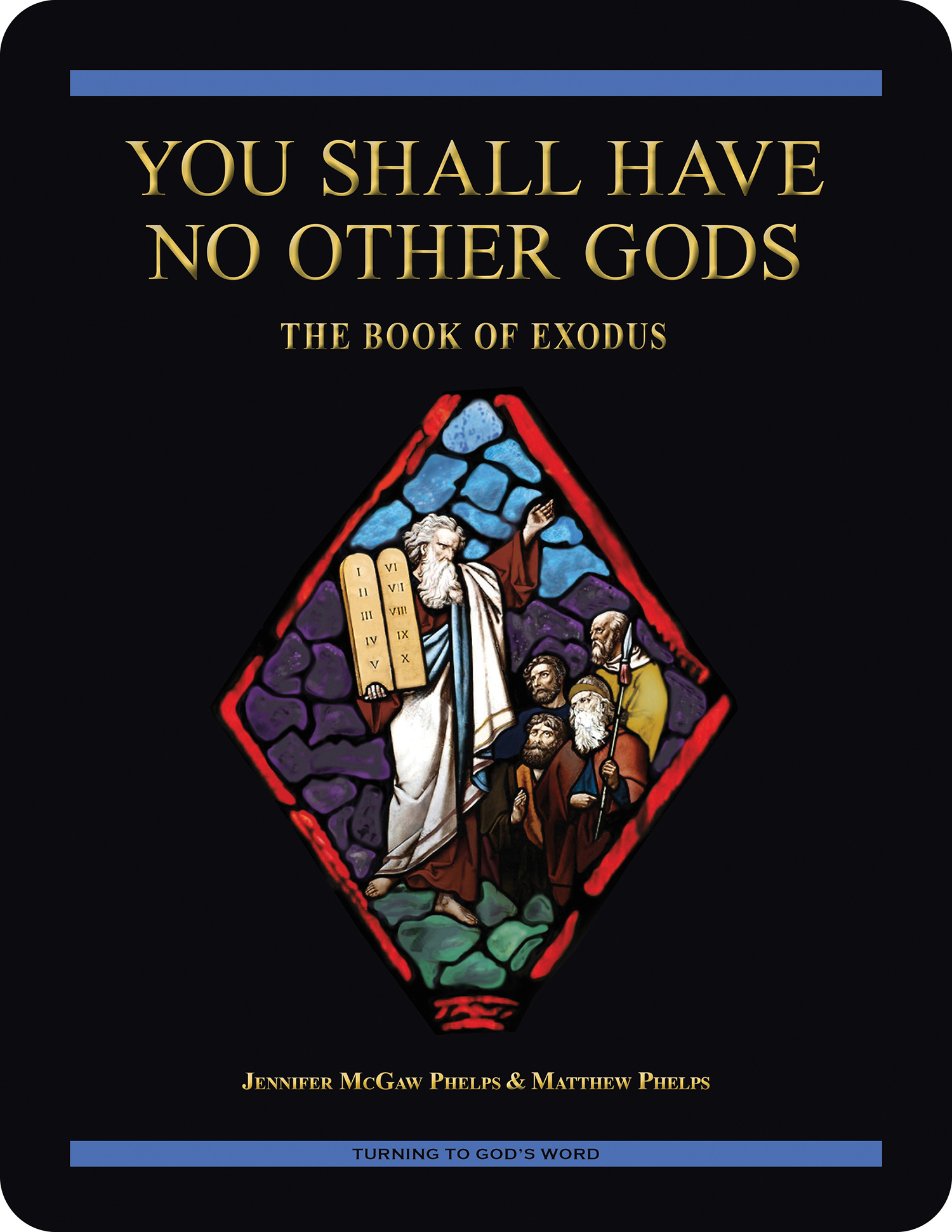 You Shall Have No Other Gods: The Book of Exodus, a 28-lesson Catholic Bible study with an imprimatur, provides an in-depth look at how significant events in biblical history that occurred thousands of years ago to descendants of Jacob remain relevant and even critical for present-day Christians to understand. The deliverance of the Hebrews from slavery in Egypt and the giving of Ten Commandments are examined along with the development of Moses’ relationship to God. Click here to view a sample of the first lesson.
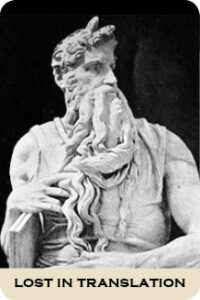
 Click on the picture of the statue of Moses with horns (above) to learn more about Lost in Translation. A new entry is archived each Monday. Contact us to receive Lost in Translation by email every week. You may use any of the contact links on our website to ask Matthew a question.