
into test
 One of the best-known passages in the New Testament is the Lord’s Prayer. Catholics often refer to this prayer as the “Our Father.” There are a number of differences between the way I would choose to translate this prayer and the common English text of the prayer. One such difference falls in the Gospel According to Matthew 6:13, which I’ve translated as “Don’t lead us into test, but rescue us from wickedness.”
The Greek word I chose to translate as test is πειρασμός (peirasmos). This word is rare in Greek literature outside of the Septuagint and New Testament. It’s related to the more common verb πειράζω (peirazo) that means “put to the test,” “try,” or “make trial of.” A peirasmos, then, is a testing or a trial.
It’s worth noting that the Greek word peirasmos often is translated in the “Our Father” as “temptation,” but that translation may be misleading. The idea of temptation suggests a narrow scope of test or trial in which we’re enticed away from what is good. Trial or testing in the more general sense suggests a more general testing of who we are and what we value, and this type of testing can include a much broader scope.
Do you think that God tests us? Have you ever felt that you were being tested by God in terms of being enticed away from what is good? Have you ever felt that you were being tested in terms of what you value? Which type of testing seems more consistent with what you know about God? What reason can you think of that might explain why Jesus instructs his disciples to pray that they not be tested?
related topics: agony; prayer; temptation; test
you also may like our study of the Letter to the Hebrews (digital only)
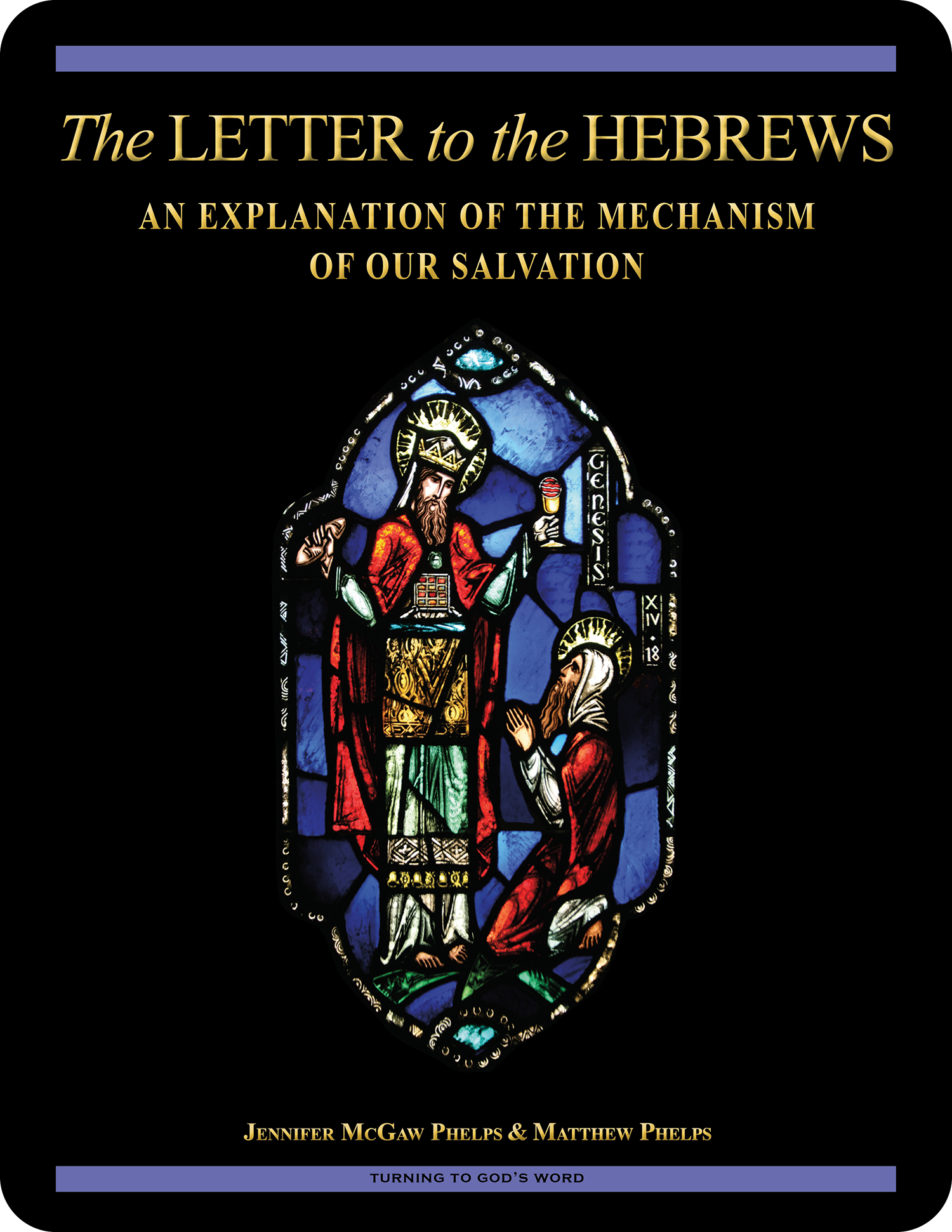 Many Christians struggle to understand one of the central mysteries of our faith: how Jesus can be both human and divine at the same time. The Letter to the Hebrews: An Explanation of the Mechanism of Our Salvation, an 18-lesson Catholic Bible study with an imprimatur, offers an in-depth look at the way in which Jesus’ dual nature allows for the salvation of humanity. The Letter to the Hebrews is designed to provide information that will encourage Christians to remain faithful. Click here to view a sample of the first lesson.
 Click on the picture of the statue of Moses with horns (above) to learn more about Lost in Translation. A new entry is archived each Monday. Contact us to receive Lost in Translation by email every week. You may use any of the contact links on our website to ask Matthew a question.