
justification
 What is justification by faith? Being “justified by faith” is found in Paul’s Letter to the Romans 5:1 (NABRE). The idea of justification is essential in Christian theology, but like many concepts that are important in Christianity, the meaning has been slightly distorted over time. Pause for a moment and examine what you think it means to be justified.
The Greek word δίκαιος (dikaios) is the adjective that often is translated as “right” or “just.” In its root concept, however, this word has a slightly different meaning. Originally, dikaios meant “observant of custom or rule,” or “well-ordered.” The person who was just, then, was the person who followed the customs and laws of the land. Someone who is justified is someone who is made to follow the rules or laws.
This concept of justification is especially important to Christianity due to the preeminence of the law. Paul is concerned deeply with the impossibility of following the law in a Christian context, and he raises the idea that it’s impossible. Being made just in a Christian sense, then, is being empowered to follow and to fulfill the law. Paul suggests that it is faith or obedience that enables this fulfillment of the law. In Paul’s theology, faith is the virtue that empowers Christians to follow a law that is otherwise impossible. Further, Paul teaches that it specifically is total surrender to God that allows this obedience. How do you think it is that Christianity makes such justification by faith possible in a way that wasn’t within Judaism?
related topics: belief; believe in Jesus; faith; little faith
you also may like our study of the book of Genesis
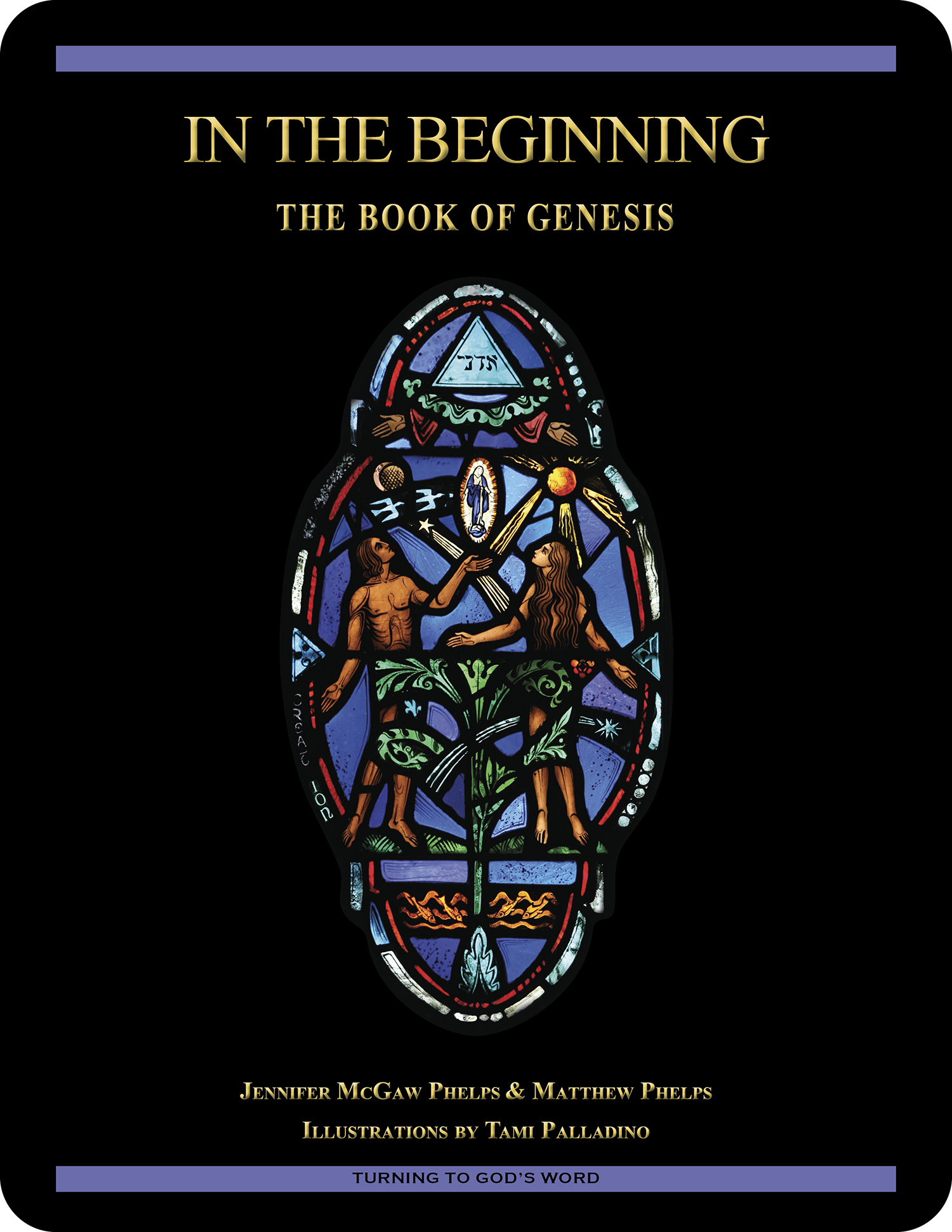 The first seven lessons of In the Beginning: The Book of Genesis, a 28-lesson Catholic Bible study with an imprimatur, provide an in-depth look at the very earliest biblical history—including the two accounts of Creation, events surrounding the Fall of Adam and Eve, the relationship between Cain and Abel, and the baptismal foreshadowing present in the account of Noah and the Flood. Remaining lessons look at lives of the patriarchs Abraham, Isaac, Jacob, and Joseph. Click here to view a sample of the first lesson.
 Click on the picture of the statue of Moses with horns (above) to learn more about Lost in Translation. A new entry is archived each Monday. Contact us to receive Lost in Translation by email every week. You may use any of the contact links on our website to ask Matthew a question.
Leave a Reply
You must be logged in to post a comment.