
kingdom of heaven
 In the Gospel According to Matthew 13:24–53 (NABRE), Jesus tells five parables about the kingdom of heaven, a topic of constant discussion in the Gospels. Indeed, it’s talked about frequently enough that it’s easy to lose sight of what it means. There are two concepts here, each worth developing for the sake of gaining a better understanding of this fundamental message of the Gospels.
The Greek word translated as kingdom, βασιλεία (basileia), has a range of possible meanings. It does mean kingdom, but there’s a difference in emphasis from the English word for kingdom. The Greek word derives from βασιλεύς (basileus) meaning “king,” so this sense of kingdom emphasizes royal reign more than geography. The emphasis is on the person of the king rather than on the parcel of land over which he rules. The English word kingship might be a slightly better translation.
The concept of heaven in English similarly has been obscured. Even in English, the word heaven literally means sky rather than the eternal dwelling place where we live with God. Likewise, the Greek word οὐρανός (ouranos) literally means “the sky.” As the phrase appears in the Gospels, the usage is plural, meaning “skies.”
What, then, can be determined about the kingdom of heaven? The plural of ouranos emphasizes the universal aspect of what’s being discussed. We might more rightly talk about the kingdom of the heavens. Moreover, there’s a contrast between this kingdom and every other kingdom. Whereas the earth has limits and boundaries, the sky has no such limits. A kingship of the skies, then, ends up emphasizing the universal and all-encompassing natures of this kingship. The phrase in Greek emphasizes the utterly unlimited rule of God.
Why do you think Jesus placed so much emphasis on the kingdom of heaven in his ministry?
related topics: authority; judgment
you also may like our study of Saul, David & Solomon (digital only)
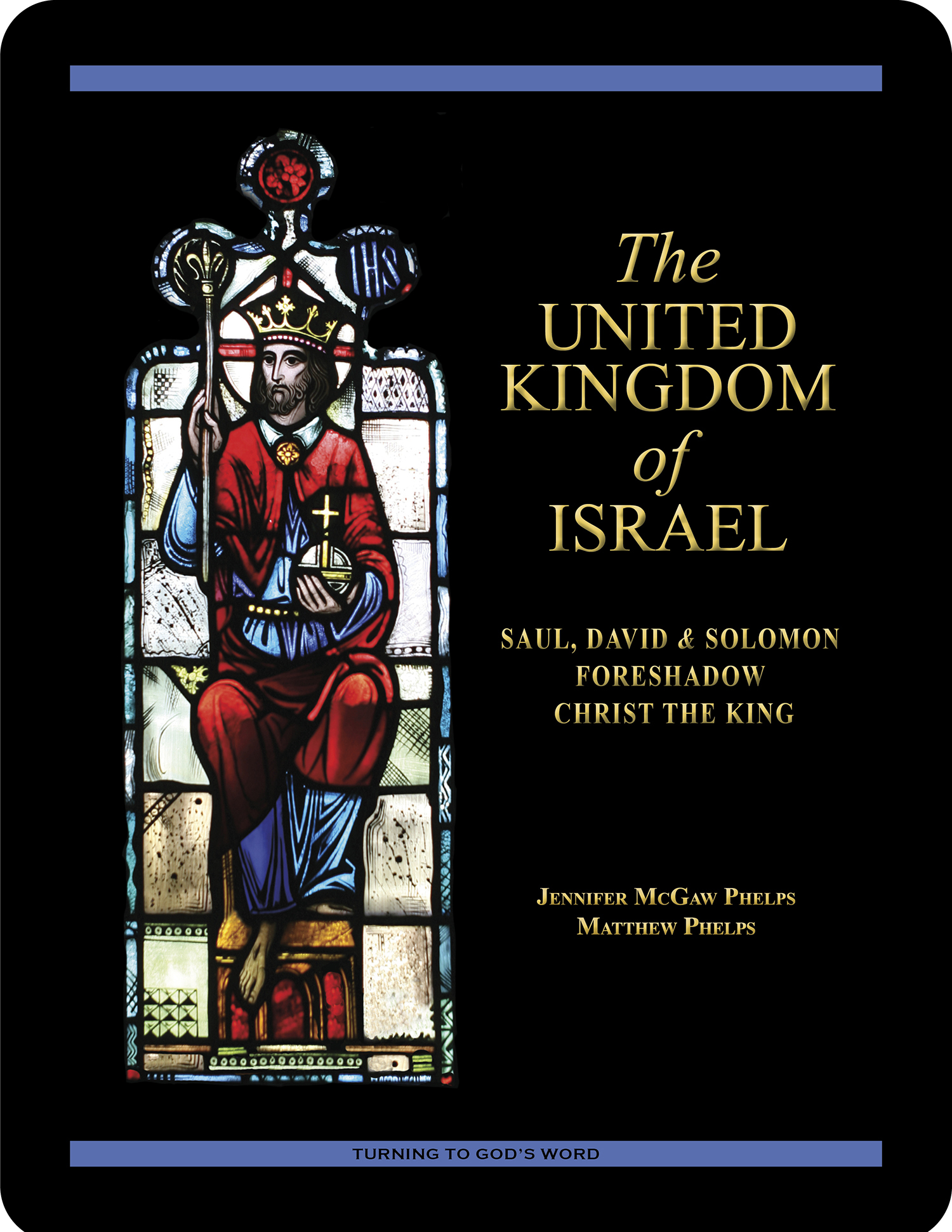 The United Kingdom of Israel: Saul, David & Solomon Foreshadow Christ the King, a 28-lesson Catholic Bible study with an imprimatur, provides an in-depth look at the First and Second Books of Samuel to learn how the lives of the monarchs Saul, David, and Solomon point ahead to the kingdom of heaven. The unified reign of King David is seen as a foreshadowing or type of the unity that is one of the four marks of the Church—the kingdom of God—established by Jesus Christ. Click here to view a sample of the first lesson.
 Click on the picture of the statue of Moses with horns (above) to learn more about Lost in Translation. A new entry is archived each Monday. Contact us to receive Lost in Translation by email every week. You may use any of the contact links on our website to ask Matthew a question.