
order & chaos
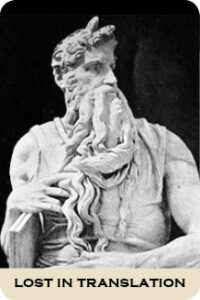 The book of Genesis begins with an account of the Creation of the world that contains many significant theological realities upon which the Christian notion of salvation is built—including the relationship between order and chaos. This important foundation is highlighted by the author of the Gospel According to John, who opens the prologue to his work (NABRE) with the same phrase as the opening to the Old Testament: “In the beginning … .”
In the account of Creation found in the first chapter of the book of Genesis, in the beginning there is a formless void. The Hebrew word used to describe this void is בֹּהוּ (bohuw), which means “emptiness.” The Septuagint renders this as ἀόρατος (aoratos), a Greek word that means “unseen” or “invisible.” Elsewhere, Greek literature describes the original state of the universe with χάος (chaos), a word that has come into English usage to describe complete disorder and confusion.
From this chaos, God creates the universe though several statements in which he speaks the world into being. The first of these, “let there be light,” commonly is referenced in its Latin translation, fiat lux. From there, God goes on to speak all of Creation into being.
One of the Greek words for the universe is κόσμος (kosmos), which literally means order. The Greeks saw an underlying order or structure to the universe and so saw its Creation as bringing order from chaos. The view in the book of Genesis is much the same. The beginning is seen as inherently unformed, with the Creation act bringing order to disorder.
Why do you think it is that the author of the Gospel According to John saw the act of Christian salvation achieved by Jesus Christ as similar to this act of Creation? What might this image suggest about the original Creation?
related topics: economy of grace; “I Am”; inspiration; light; sabbath
you also may like our study of Saul, David & Solomon (digital only)
 The United Kingdom of Israel: Saul, David & Solomon Foreshadow Christ the King, a 28-lesson Catholic Bible study with an imprimatur, provides an in-depth look at the First and Second Books of Samuel to learn how the lives of the monarchs Saul, David, and Solomon point ahead to the kingdom of heaven. The unified reign of King David is seen as a foreshadowing or type of the unity that is one of the four marks of the Church—the kingdom of God—established by Jesus Christ. Click here to view a sample of the first lesson.
 Click on the picture of the statue of Moses with horns (above) to learn more about Lost in Translation. A new entry is archived each Monday. Contact us to receive Lost in Translation by email every week. You may use any of the contact links on our website to ask Matthew a question.