Pentecost
 The liturgical feast of Pentecost has roots going back into the Old Testament, where it’s established in the book of Exodus 34:22 (NABRE). The common name of the feast comes from a Greek root word, Πεντηκοστή (pentecoste), meaning “fiftieth” because it occurs on the fiftieth day (seven weeks) after Easter.
The Old Testament feast of the same name also was known as the feast of Weeks or Shavuot. It was a feast of the harvest and commemorated as well the giving of the law to the people by God.
In a Christian context, the feast of Pentecost marks the sending of the Holy Spirit upon the people. Consider ways in which the Old Testament and the Christian contexts of the feast might be connected.
related topics: Advocate; blasphemy; Paraclete; spirit; Trinity; wind & spirit
you also may like our free year-long study of Scripture & the Rosary (digital only)
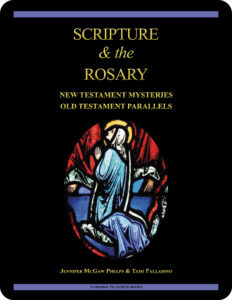 Scripture & the Rosary: New Testament Mysteries, Old Testament Parallels, a 26-lesson Catholic Bible study with an imprimatur, looks at the biblical foundations of the Rosary. The study includes lessons on Pope St. John Paul II’s Rosarium Virginis Mariae (Rosary of the Virgin Mary), the Apostles’ Creed, and the Luminous Mysteries as well as the original 15 Mysteries of the Rosary. Color photographs of stained glass windows depict key scenes in the lives of Jesus and Mary. In lieu of a sample, check out our free digital lessons.
 Click on the picture of the statue of Moses with horns (above) to learn more about Lost in Translation. A new entry is archived each Monday. Contact us to receive Lost in Translation by email every week. You may use any of the contact links on our website to ask Matthew a question.