
Letter of Paul to the Philippians
 One of the more familiar passages from the Letter of Paul to the Philippians is hard to grasp in English because the original Greek defies easy translation. Let’s walk through this challenge and see if some clarity can be added.
The original Greek of the Letter of Paul to the Philippians 2:6 (NABRE)—ὃς ἐν μορφῇ θεοῦ ὑπάρχων οὐχ ἁρπαγμὸν ἡγήσατο τὸ εἶναι ἴσα θεῷ—usually is translated as: “though he was in the form of God, did not regard equality with God something to be grasped.”
We’ll divide the passage into two grammatical sections for the sake of analysis. The first is “though he was in the form of God….” Of special interest here is the verb translated as “was.” This section does not use a simple past tense of the verb “to be” as we might expect from this translation. Rather, it uses the verb ὑπάρχω (hyparcho), a verb form coming from a Greek word that means among other things “beginning.” This is an odd and much stronger past tense than “was” and implies something like “began as” or “began in” or even “originated in.”
The second grammatical unit is translated “did not regard equality with God something to be grasped.” The verb translated as “regard” is from the Greek word ἡγέομαι (hegeomai), a word based on a Greek word meaning “to lead.” The form of thinking or judging expressed by this word is a sort of judging or deciding with authority. It’s more definitive in suggestion than thinking or regarding.
Finally and perhaps most interestingly is the final part, “to be grasped.” The Greek word here, ἁρπαγμός (harpagmos), means “a thing to be seized” or “booty.” The important distinction that can be lost in the translation is that this is indicated as the result of some sort of robbery or illegitimate act. There’s a contrast in this passage, then, between being in any way legitimately equal to God or trying to take that equality.
Does understanding the underlying meaning of some of these Greek words improve your understanding of this passage? What point do you think Paul is trying to make about Jesus?
related topics: humble; humility; servant; slave
you also may like our study of the Gospel According to John
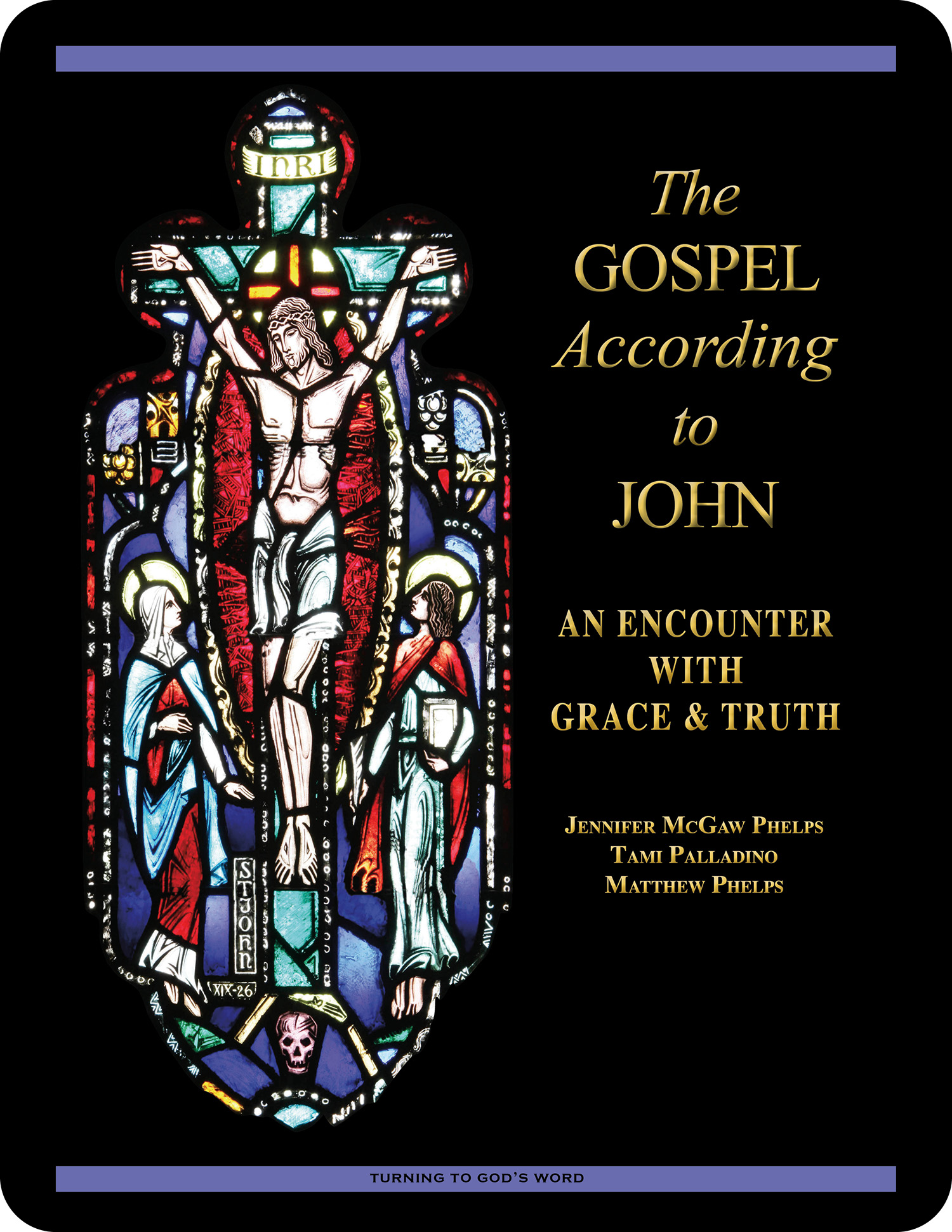 The Gospel According to John: An Encounter with Grace & Truth, a 25-lesson Catholic Bible study with an imprimatur, examines the Fourth Gospel’s view of Jesus Christ as the Son of God, with special emphasis on the institution of the sacraments of the Church as the means by which Christians are purified and made holy. This recently revised study includes maps and additional commentary, and takes a closer look at the way in which Jesus relates to individual men and women. Click here to view a sample of the first lesson.
Click on the picture of Moses to learn more about Lost in Translation, to ask Matthew a question, or to sign up to receive Lost in Translation by email every week. A new entry in Lost in Translation is archived each Monday.