
prayer
 In this week’s liturgy, the readings focus on Jesus teaching his disciples about prayer. In the Gospel According to Luke 11:1–13 (NABRE), Jesus has been discussing mistakes people make when they pray. As a remedy, Jesus offers the Lord’s Prayer, which Catholics often refer to as the “Our Father.”
What do you think praying meant to those with whom Jesus was talking? What do you think that it means to Jesus? What do you think that Jesus intended the “Our Father” to accomplish for his disciples? What effect does praying the “Our Father” have on your own spiritual life?
The Greek word used here for prayer is προσεύχομαι (proseuchomai), a compound form of the verb εύχομαι (euchomai), which also means “I pray.” The difference between proseuchomai and euchomai comes from the prefix προσ- (pros-). This prefix adds the implication of direction or motion toward to the idea of prayer, so more than simply being a request for a particular desire or outcome, the Greek concept of prayer is about how to address God.
In light of these Greek conceptual underpinnings, we see that the Lord’s Prayer in the Gospel According to Luke serves as a formula that defines the way we approach God. How do you approach or address God? How might the “Our Father” seen in this light inform your relationship with God? What advantages do you see to using a formulaic approach to speaking with God? What are some disadvantages? What can you do to prevent the “Our Father” from becoming a rote recitation of words instead of a heartfelt plea to God?
related topics: daily needs; prayer as barter; temptation; test
you also may like our study of the book of Genesis
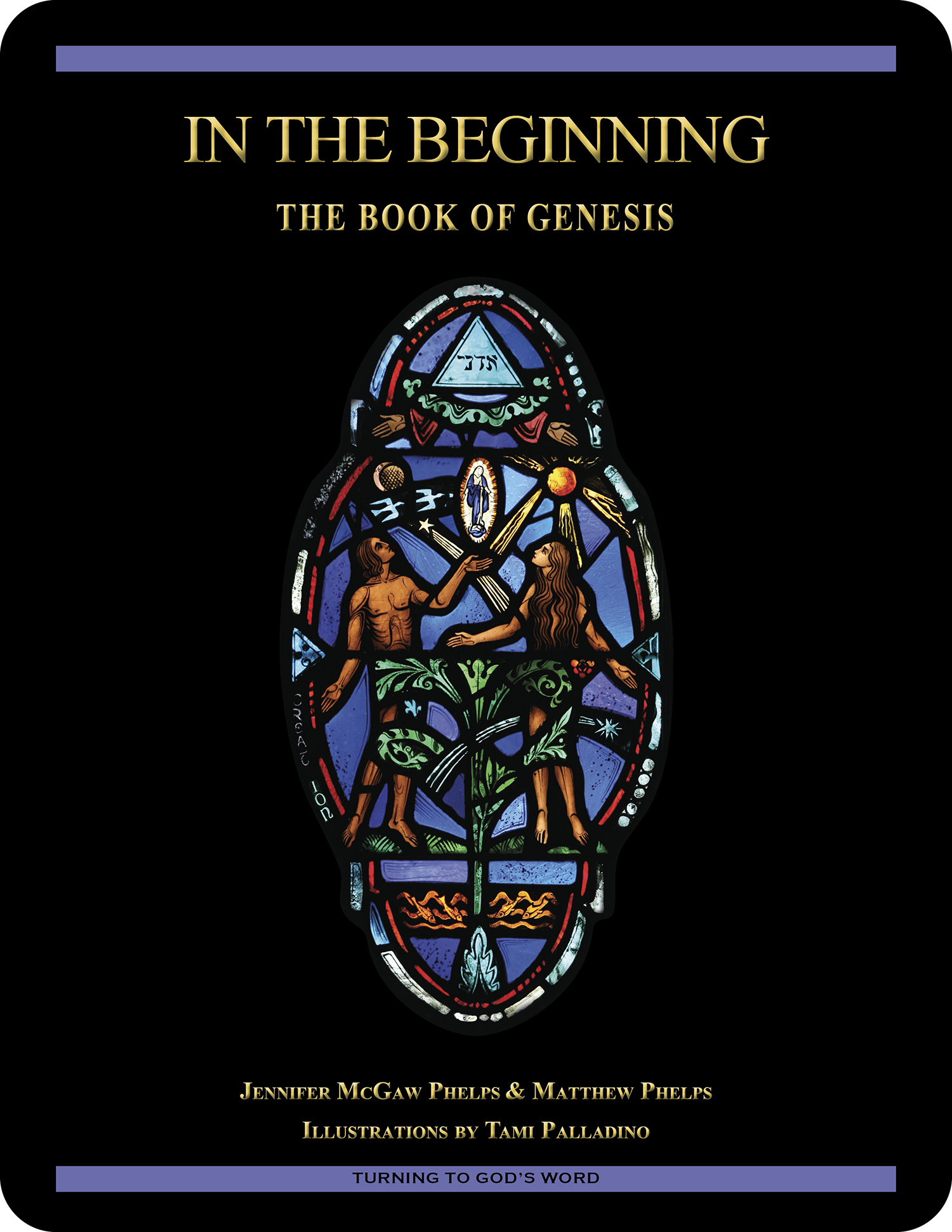 The first seven lessons of In the Beginning: The Book of Genesis, a 28-lesson Catholic Bible study with an imprimatur, provide an in-depth look at the very earliest biblical history—including the two accounts of Creation, events surrounding the Fall of Adam and Eve, the relationship between Cain and Abel, and the baptismal foreshadowing present in the account of Noah and the Flood. Remaining lessons look at lives of the patriarchs Abraham, Isaac, Jacob, and Joseph. Click here to view a sample of the first lesson.
 Click on the picture of the statue of Moses with horns (above) to learn more about Lost in Translation. A new entry is archived each Monday. Contact us to receive Lost in Translation by email every week. You may use any of the contact links on our website to ask Matthew a question.