
prophet
 In book of Deuteronomy 18:15–19 (NABRE), Moses tells the people that he will raise up a prophet “like him” to speak to them because the people have requested that they do not want to hear the voice of the LORD directly. We often think of a prophet primarily as one who foretells the future, but in this context, a prophet has a much different role.
The Hebrew word for prophet, נָבִיא (navi), is related to speaking. The Greek word προφήτης (prophetes) comes from the verb πρόφημι (prophemi), a combination of a verb meaning “to speak” and the prefix “pro-“. This prefix can mean either “before” in the sense of time, or “in front of” or “forth” in a spatial context. In line with this week’s reading from the book of Deuteronomy, the ancients viewed prophecy spatially as someone speaking forth to a group of people to disclose the words of God.
Why do you think it is that the people wanted someone to speak to them on God’s behalf? How do we as Christians hear the voice of God?
related topics: apostle; prophecy; word of God
you also may like our free year-long study of Scripture & the Rosary (digital only)
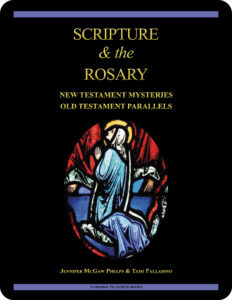 Scripture & the Rosary: New Testament Mysteries, Old Testament Parallels, a 26-lesson Catholic Bible study with an imprimatur, looks at the biblical foundations of the Rosary. The study includes lessons on Pope St. John Paul II’s Rosarium Virginis Mariae (Rosary of the Virgin Mary), the Apostles’ Creed, and the Luminous Mysteries as well as the original 15 Mysteries of the Rosary. Color photographs of stained glass windows depict key scenes in the lives of Jesus and Mary. In lieu of a sample, check out our free digital lessons.
 Click on the picture of the statue of Moses with horns (above) to learn more about Lost in Translation. A new entry is archived each Monday. Contact us to receive Lost in Translation by email every week. You may use any of the contact links on our website to ask Matthew a question.